The Sacrificial Nature of the Mass
The Mass is not a memorial meal but the unbloody re-presentation of Calvary, as the Council of Trent taught and Christ’s own words at the Last Supper show.
- Date
- Category
- Reading time
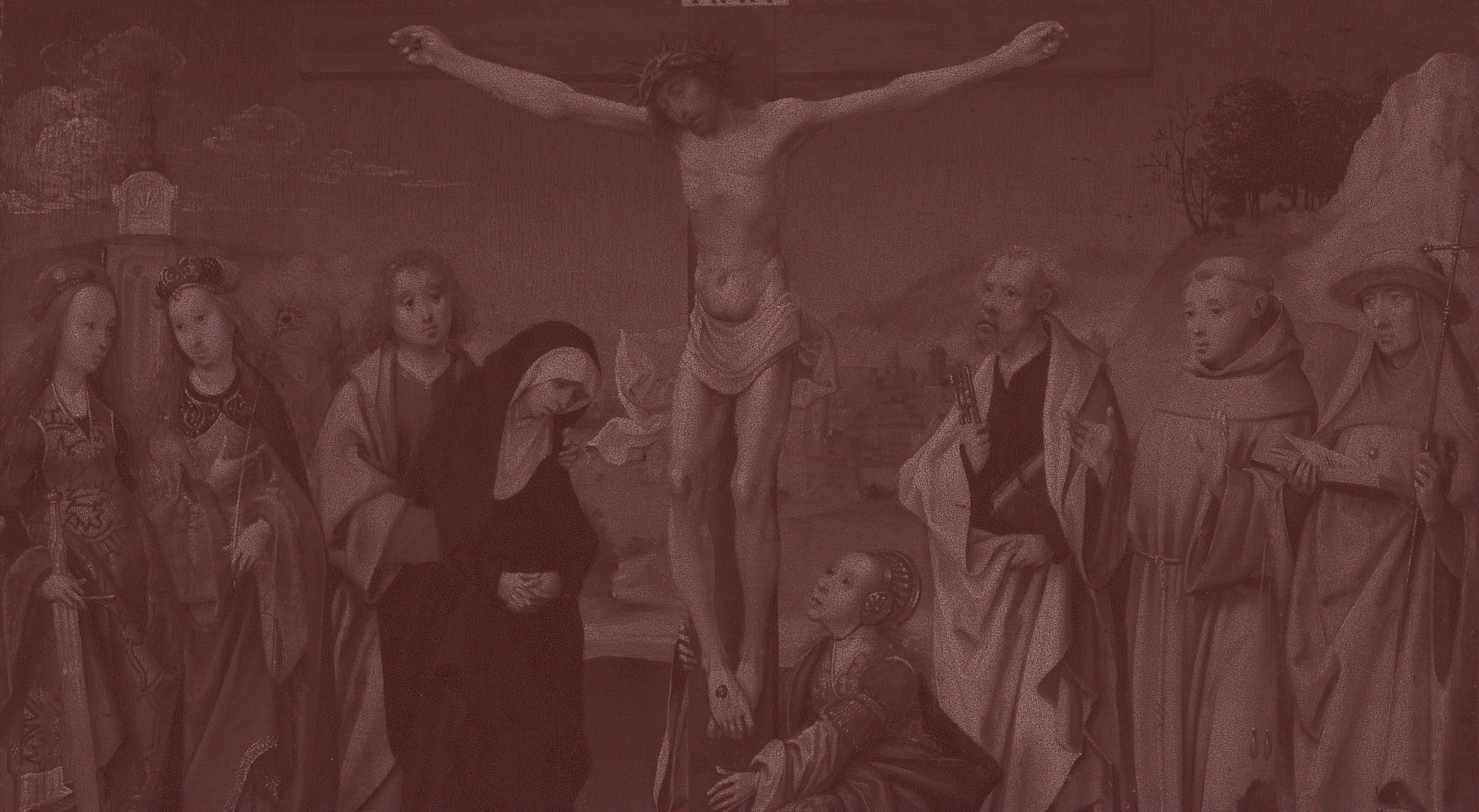
Central to Catholic worship is the understanding that the Mass is a sacrifice—an unbloody re-presentation of the Sacrifice of Calvary. Rooted in Scripture and upheld by the Church for centuries, this teaching was reaffirmed by the Council of Trent. In response to Protestant denial, the Council declared: “In this divine sacrifice... the same Christ is contained and immolated in an unbloody manner, who once offered Himself in a bloody manner on the altar of the cross” (Session 22, Chapter 2).
The Council of Trent's defense of the Mass as a sacrifice reaffirms the Church’s understanding that the Eucharist is not merely a symbolic meal or memorial but the very sacrifice of Christ made present again. This is in line with the words of Christ at the Last Supper: “This is my body which is given for you; do this in remembrance of me” (Lk. 22:19). The word “remembrance” in this context corresponds to the rich Hebrew concept of zikkaron. In Jewish tradition, to “remember” (zikkaron) is not merely to recall a past event, but to make it present and efficacious for those participating. Thus, in the context of the Passover and the Eucharist, the act of remembrance is not symbolic alone—it is sacramental, re-presenting the saving action of God. When Christ commanded His disciples to “do this in remembrance of me,” He was not instituting a mere memorial meal, but inaugurating a true sacrificial offering that makes present the one eternal sacrifice of Calvary.
The Role of the Priest in the Sacrifice
To grasp the significance of this teaching, we must understand the role of the priest in the Mass. By virtue of his ordination, the priest acts in persona Christi—in the person of Christ. He does not simply preside over a communal meal but offers the Sacrifice of the Mass, making Christ’s one Sacrifice present on the altar. The priest’s role is essential; through him, as an alter Christus, Christ’s sacrificial offering becomes present. The words of consecration (This is my Body... This is the chalice of my Blood…) are not the priest’s own but Christ’s, spoken through him.
The priesthood’s sacrificial dimension is ontological1 — a fundamental part of the priest’s being, imparted at his ordination. The sacrament of Holy Orders imprints a permanent character on the priest’s soul, configuring him to Christ the High Priest and enabling him to act in Christ’s place during the liturgy. Traditionally, the priest wears sacred vestments symbolizing his sacrificial role and distinguishing him from the laity. The vestments are visual reminders that the priest is not acting on his own but as a representative of Christ, offering His body and blood for the salvation of souls.
The priest’s identity is inseparable from the altar, where he fulfills his most important role—offering Christ’s sacrifice to the Father. For this reason, the Church teaches that the priest alone is the ordinary minister of the Eucharist, as his ordination uniquely qualifies him for this sacred action.2
The priesthood’s ontological nature requires that the priest’s actions in the liturgy be directed toward the altar of sacrifice, not the congregation. His focus is on God, to whom the sacrifice is offered. This is why, in the traditional liturgy, the priest faces the altar,3 leading the people in prayer rather than engaging them in dialogue. The priest’s position at the altar reflects his role as a mediator between God and man, standing before the altar as Christ did on Calvary, offering His sacrifice for the salvation of the world.
The Proper Orientation of Worship
In light of this sacrificial understanding, the traditional practice of ad orientem—where the priest and the people together face liturgical east during Mass—holds profound significance. This posture highlights the priest leading the people in offering the Sacrifice of the Mass to God. Facing east also symbolizes the Church’s anticipation of Christ’s return, just as the rising sun brings light to the world.4
When the priest faces east along with the congregation, this common orientation reinforces the idea that the Mass is not a dialogue between the priest and the people but a collective act of worship directed toward God. In this posture, the priest acts as the head of the Mystical Body of Christ, offering the prayers of the Church to the Father through the Son.
Ad orientem worship, which fell out of practice after the Second Vatican Council, is now being rediscovered by many parishes seeking to restore a sense of the sacred. This practice helps to restore the focus of the liturgy on God rather than on the congregation, reemphasizing the transcendent nature of the Mass.
The Victimhood of Christ and the Priest
In offering the Mass, the priest represents Christ as both High Priest and Victim. This dual identity is key to understanding the Mass’s sacrificial nature. Just as Christ offered Himself as the perfect sacrifice on Calvary, the priest offers Christ again on the altar, making that same sacrifice present. The priest also shares in Christ’s victimhood through his own self-offering. The priest is called to lay down his life in service to the Church, following Christ’s example of sacrificial love.
The priest, by offering the Mass and by living a life of sacrificial service, participates in Christ’s redemptive work. His life, like Christ’s, is marked by self-denial and a total offering to God. This is why the priesthood cannot be reduced to a mere function or role within the Church—it is a vocation of total self-giving, intimately connected to the sacrifice of the Mass.
The Laity’s Participation in the Sacrifice
Understanding the Mass as a sacrifice calls us to active participation, not as passive observers, but as participants in Christ’s offering. This involves uniting our lives, with all their joys and sufferings, to Christ’s sacrifice. In doing so, we fulfill our baptismal call to offer ourselves as living sacrifices to God.5
We must therefore recover the sacrificial understanding of the Mass, along with traditional practices such as ad orientem worship, if we hope to restore the sense of the sacred and the transcendence of the liturgy. By reclaiming these traditions, the Church can once again offer worship that is truly worthy of God, and that draws the faithful into a deeper communion with Christ, the true High Priest and Victim.
Notes
- In Catholic theology, with regards to the priesthood, ontological signifies that the Sacrament of Holy Orders confers an indelible change to the very being of the man ordained. This ontological transformation configures the priest to Christ in a unique way, enabling him to act in persona Christi—in the person of Christ—especially in the celebration of the sacraments. It is a permanent mark on the soul that sets the priest apart for sacred ministry.Back
- “In the ecclesial service of the ordained minister, it is Christ himself who is present to his Church as Head of his Body, Shepherd of his flock, high priest of the redemptive sacrifice, Teacher of Truth. This is what the Church means by saying that the priest, by virtue of the sacrament of Holy Orders, acts in persona Christi Capitis” (CCC, 1548).Back
- The priest and congregation turned together toward the symbolic "East" during the liturgy—traditionally understood as the direction of Christ’s Second Coming. Even when a church is not physically oriented to the east, the priest facing the altar (ad orientem) represents this eschatological posture of waiting and worship. It emphasizes that the Mass is directed toward God, not the congregation, and expresses the Church’s hope-filled orientation toward the risen and returning Christ. Consider, too, in most Catholic cemeteries, headstones are often oriented to face in an easterly direction.Back
- Consider, too, in most Catholic cemeteries, headstones are often oriented to face in an easterly direction in anticipation of the Second Coming of Christ.Back
- Romans 12:1: “I beseech you therefore, brethren, by the mercy of God, that you present your bodies a living sacrifice, holy, pleasing unto God, your reasonable service.”Back
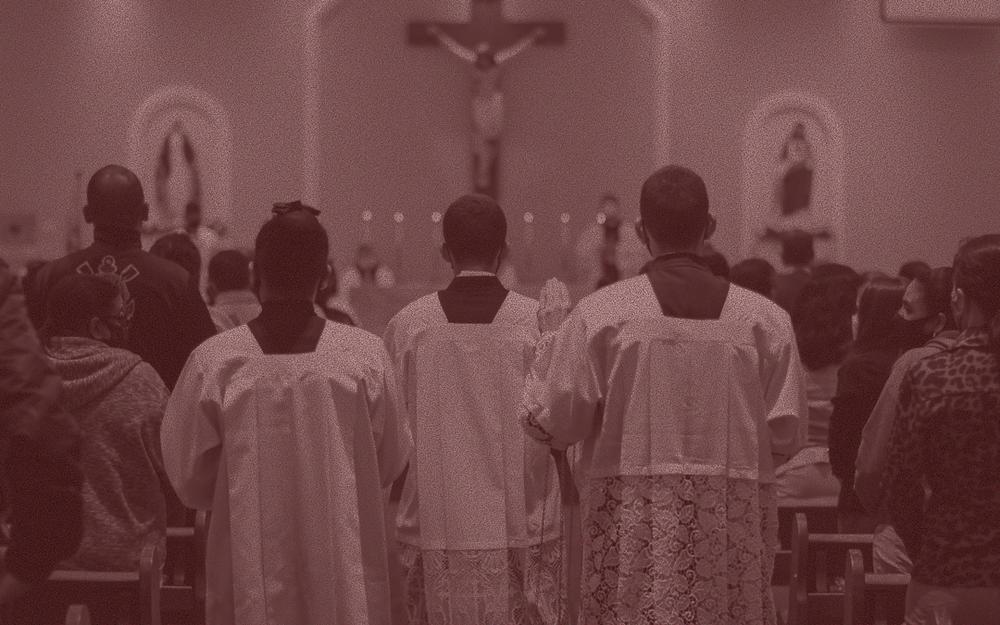


What is Sacred Worship?
Worship is an act of justice, giving God what He is owed. Why the Mass loses its order when the community eclipses the God it exists to adore.
Restoring the Sacred: Preface
The Church has lost its sense of the sacred. Why the Traditional Latin Mass is not a relic of the past but a path to real renewal.
A Defense of the Blessed Virgin Mary as Co-Redemptrix
Whether the title ‘Co-Redemptrix’ is doctrinally sound.