What is Sacred Worship?
Worship is an act of justice, giving God what He is owed. Why the Mass loses its order when the community eclipses the God it exists to adore.
- Date
- Category
- Reading time
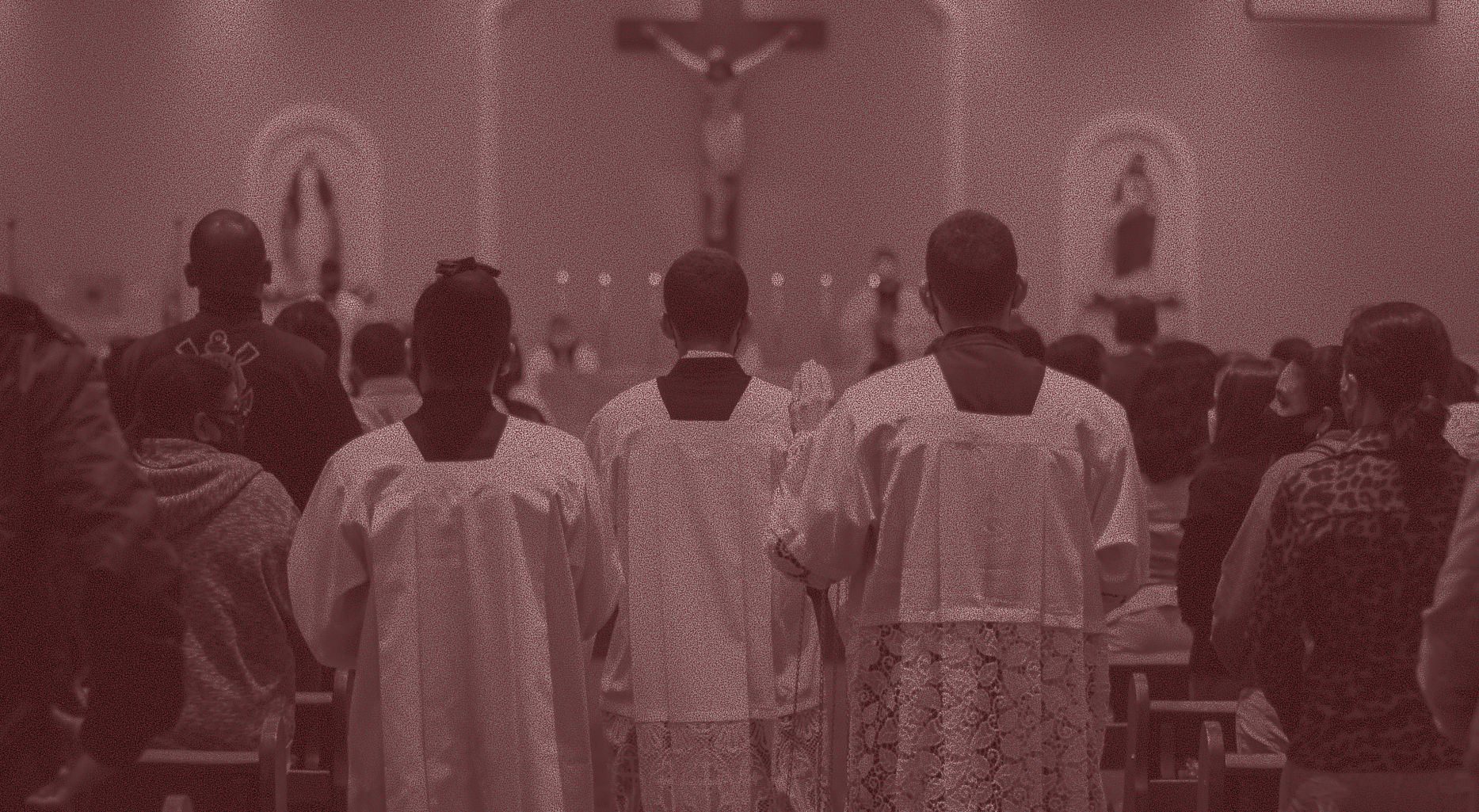
The angelic doctor himself, St. Thomas Aquinas, teaches that worship is an act of the virtue of religion, guiding us to give God the honor and reverence He is due. “Now it is evident,” says Aquinas in his Summa Theologica, “that lordship belongs to God in a special and singular way, because He made all things, and has supreme dominion over all. Consequently, a special kind of service is due to Him, which is known as latria (worship) in Greek; and therefore it belongs to religion.”1.
Worship is, at its core, an act of justice giving God what is owed to Him because of who He is: our Creator, Redeemer, and Sanctifier. It reflects the proper ordering of creation, where man, as a rational creature, recognizes his place before the Almighty. Through sacred worship, we give glory to God, not because He needs it, but because it is fitting and proper (dignum et justum est)2 for us to acknowledge His infinite goodness, power, and mercy. Worship expresses our love for God, transcending human interactions and touching the Divine.
The essence of worship lies not in what members of a particular parish community expect to gain from it, as merely a transaction to secure God’s favor. Its fundamental purpose is to glorify God, who in justice deserves our worship and adulation. Yet, in recent decades, this truth has been overshadowed by a growing focus on the horizontal dimension—namely an emphasis on the congregation as a community and Mass as a communal meal. Community, while valuable, should not eclipse the liturgy’s central purpose. Worship loses its order when the vertical dimension—our worship of the Triune God—is displaced by concerns over welcoming committees and inclusivity, or one’s scheduled participation in some liturgical function.
The Church Fathers consistently emphasized that worship is about entering into the mystery of God’s presence. St. John Chrysostom, reflecting in awe of the Eucharist writes: “When you see the Lord sacrificed and lying before you, and the Priest standing over the Sacrifice, and praying, and all who partake reddened with that precious Blood, can you think that you are still among men, and standing on earth? Are you not straightway transported to heaven…”3
This description from St. John Chrysostom highlights the mystical and transcendent nature of sacred worship. In this sacred moment, heaven and earth meet, drawing the faithful into the eternal liturgy where Christ, the High Priest, offers Himself to the Father for our salvation. At its core, the Mass is an eschatological4 event, anticipating the heavenly banquet where we will be united with the hosts of heaven to praise, honor, and adore the triune Godhead for all eternity.
A Return to Transcendence
The shift toward a more immanent focus— emphasizing the congregation’s participation and the need to make the liturgy more accessible—has sadly led to a loss of the sacred. The language, once rich with reverence and mystery, has been overly simplified. Sacred music has been replaced with contemporary styles, and Latin, the Church’s universal language, has been mostly abandoned for the vernacular.
These changes, while intended to promote greater understanding and participation, have in many cases led to a liturgy that feels overly familiar and devoid of wonder. The removal of sacred symbols and gestures, the simplification of the altar, the singing of vapid hymns, and the diminishing of traditional devotions have all contributed to a loss of the sense that, in the Mass, we are participating in something profoundly otherworldly— something that lifts us out of the ordinary into the extraordinary presence of God. As Pope Benedict XVI noted, “The Eucharist is not a meal with friends. It is the mystery of a covenant.”5
The Traditional Latin Mass, with its emphasis on silence, ritual, and the priest’s orientation towards God (ad orientem), offers a powerful counterpoint to this trend. In the traditional rites of the Church, the liturgy is seen as a participation in the heavenly realities, where every gesture, every word, every bit of silence is carefully ordered to draw the worshiper’s attention not to themselves, but to God. The rising incense, the reverence of the priest’s actions, and the sacredness of the Latin language all contribute to a sense of transcendence.
In contrast to modern liturgical celebrations, where the focus can often shift to the personality of the priest or the active engagement of the congregation, the Traditional Latin Mass emphasizes the action of Christ in the liturgy. The priest, standing ad orientem, faces the same direction as the people, leading them toward God. His role is not to engage the congregation as a speaker might interact with an audience, but to offer the sacrifice of the Mass on behalf of the people, acting in persona Christi (in the person of Christ).
Sacred Worship as Participation in the Divine
The liturgy, far from being a mere human activity, is a more precisely a divine action that invites our participation. In this sacred space, time itself is sanctified. The liturgical calendar, with its rhythmic cycles, mirrors God’s eternal work in creation and redemption, allowing the faithful to step beyond ordinary time and into Christ’s eternal offering to the Father.
The Church’s tradition teaches that the Mass is not merely a symbolic reenactment of the Last Supper, but a true participation in the sacrifice of Christ. As the Catechism of the Catholic Church states: “The Eucharist is thus a sacrifice because it re-presents (makes present) the sacrifice of the cross, because it is its memorial and because it applies its fruit” (CCC 1366). Through the Eucharist, we are united with Christ’s once-for-all sacrifice, and the grace of that sacrifice is made present to us here and now.
Worship as a Foretaste of Heaven
Sacred worship is a foretaste of the heavenly liturgy, where the saints and angels forever sing the praises of God. The Church, in her wisdom, has always understood the Mass as a participation in this heavenly worship. St. John the Apostle’s vision in the Book of Revelation describes the eternal liturgy of heaven, where the Lamb of God is enthroned, and the faithful offer unending praise (cf. Revelation 4-5).
At the heart of the liturgy is the worship of the Holy Trinity. The sacredness of the Mass derives not from human creativity or cultural adaptation but from its divine origin. The liturgy is an earthly participation in the eternal worship of God in heaven, a reflection of the ceaseless praise and glory that the Holy Trinity offers to itself.
As Dom Prosper Guéranger so beautifully describes in his work, Institutions Liturgiques:6
Guéranger reveals the depth of what we participate in during the Mass. It is not simply a communal gathering, nor is it merely an offering of our prayers, joys, and sorrows, but a sacred act that mirrors the very worship occurring within the triune Godhead Itself. When Christ took on human nature, He made visible what was invisible: the perfect and ceaseless worship of the Father, the Son, and the Holy Spirit. Through the Mass, we are drawn into this divine worship, and through Christ’s sacrifice, we offer perfect praise to the Trinity.
By reclaiming the sense of transcendence and mystery in worship, the Church can once again help the faithful to encounter the divine in a way that transforms their lives and prepares them for the ultimate encounter with God in eternity.
Notes
- Summa Theologiae II-II, Q. 81, Art. 1Back
- These words are uttered by the server at every Traditional Latin Mass in response to the priest during the prayer of the Preface prior to the beginning of the Canon. Back
- St. John Chrysostom, On the Priesthood, Book 3, Chapter 4, trans. Rev. T. Allen Moxon, M.A. (London: SPCK, 1932), p. 61.Back
- Eschatological is a Catholic theological term concerning the “last things”—death, judgment, heaven, and hell—as well as the ultimate fulfillment of God’s plan for creation. In Catholic theology, it also points to the Church’s orientation toward the eternal, reminding the faithful that the liturgy is a foretaste of the heavenly banquet and a participation in the eternal worship of God.Back
- June 22, 2008: Homily delivered via satellite on the occasion of the closing Mass of the 49th International Eucharistic Congress in Quebec (Canada).Back
- Guéranger, Dom Prosper, Institutions liturgiques, I, 16. Back


The Sacrificial Nature of the Mass
The Mass is not a memorial meal but the unbloody re-presentation of Calvary, as the Council of Trent taught and Christ’s own words at the Last Supper show.
Restoring the Sacred: Preface
The Church has lost its sense of the sacred. Why the Traditional Latin Mass is not a relic of the past but a path to real renewal.
A Defense of the Blessed Virgin Mary as Co-Redemptrix
Whether the title ‘Co-Redemptrix’ is doctrinally sound.